

This gluten free sourdough starter is made with just two ingredients: gluten free flour and water. It takes about a week of daily feeding for the natural yeast and bacteria in the flour to develop, which is what gives sourdough its tangy flavor and helps baked goods rise. Once your starter is active and bubbly, you can use it in a variety of recipes.
I'll share some of my favorites, along with troubleshooting and storage tips, throughout this post.
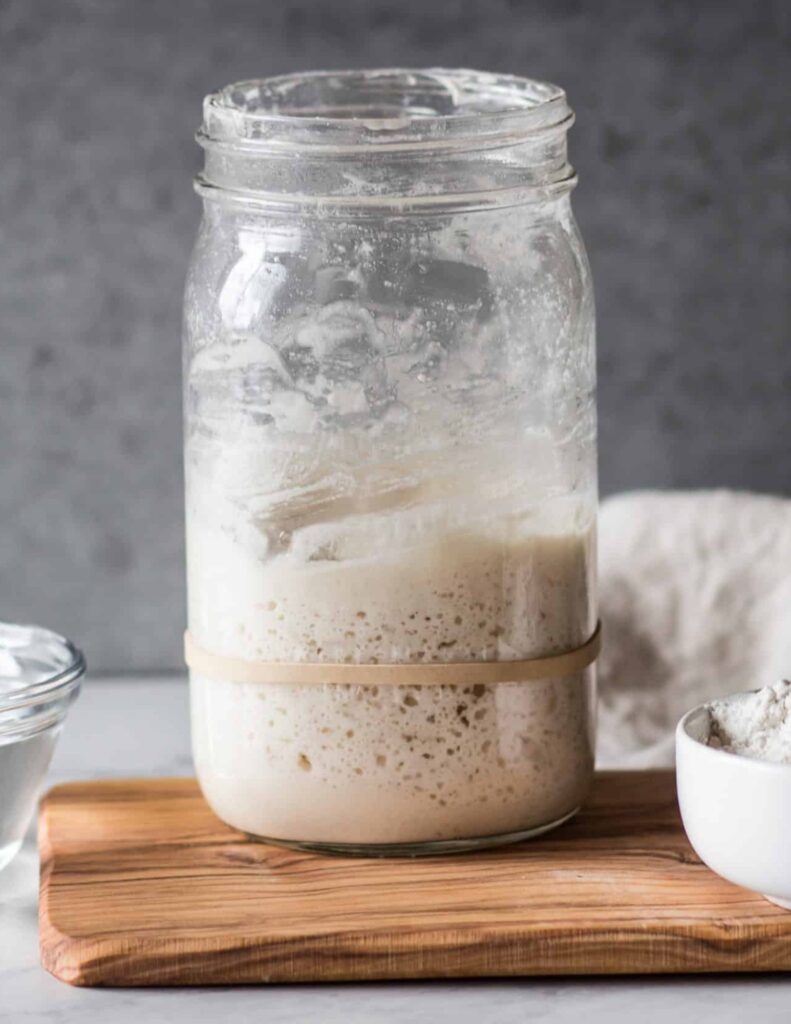
I love that making your own starter means you know exactly what went into it and that it stays completely gluten free from start to finish, with no cross contamination risk from a starter that may have been made in a shared kitchen.
It costs a lot less than buying a starter, and once it is active, it will keep going for years with regular feeding.
Once your starter is done try my Gluten Free Sourdough Bread, my Gluten Free Sourdough Sandwich Bread, my Gluten Free Sourdough Pizza Crust and my Gluten Free Sourdough Croutons.
You can find all of my bread recipes here: Gluten Free Bread Recipes
If you are looking for more guidance or have more questions my How to Feed and Maintain a Gluten Free Sourdough Starter guide is helpful.
Jump to:
- Why You'll Love This Recipe
- Troubleshooting Your Starter
- What Kind of Container Should I Use?
- Ways to Use Your Gluten Free Sourdough Starter
- Top Tip
- Frequently Asked Questions
- Didn't find the answer you're looking for?
- Supplies
- More Recipes You Might Enjoy
- Gluten Free Sourdough Starter
- Sourdough Starter Ingredients
- Instructions
Why You'll Love This Recipe
- Made with only two ingredients: gluten free flour and water
- Costs far less than buying a starter
- Keeps you in full control of ingredients, so you know it's truly gluten free
- Lasts for years with simple weekly feeding once established
- Works in a variety of recipes, including sourdough bread, pizza crust, and croutons
Troubleshooting Your Starter
Gluten free starters can behave a little differently than traditional wheat starters, so a few hiccups along the way are normal.
- No bubbles yet: Gluten free starters often take longer to become active than wheat based ones. Give it a few extra days before you worry.
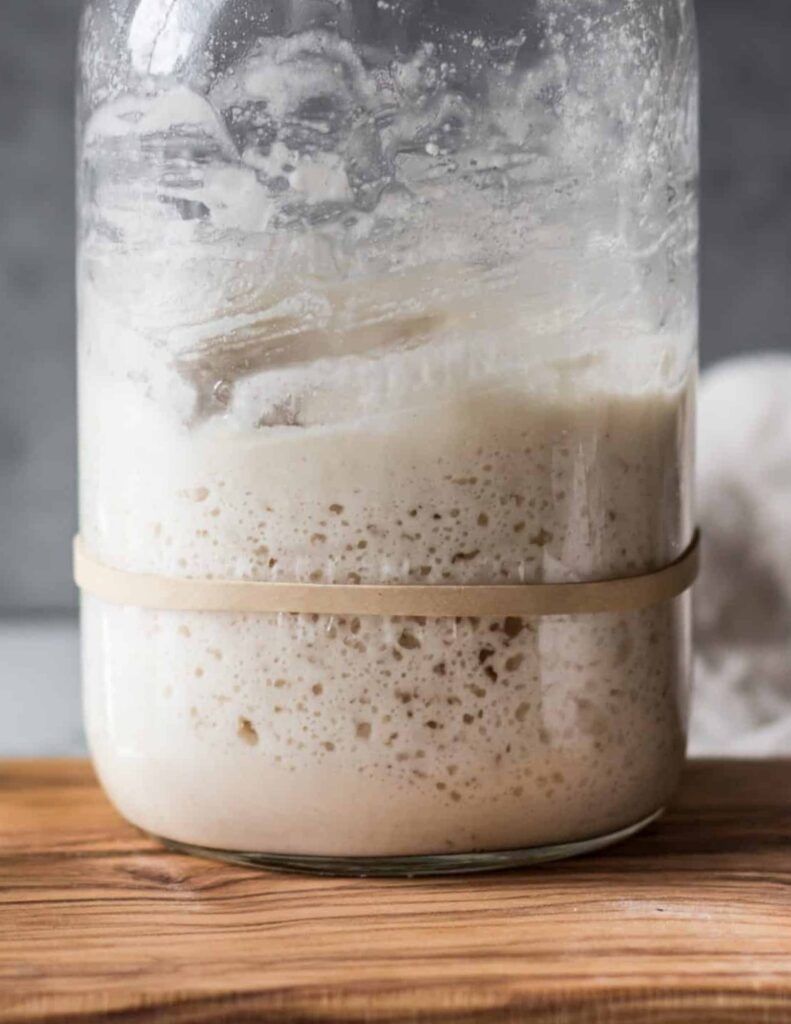
- A layer of liquid on top: This is called hooch and is a normal sign your starter is hungry. Stir it back in or pour it off before your next feeding.
- Mold: If you see fuzzy spots of green, black, or pink, discard the starter and start over with a clean jar. A thin layer of liquid or a slightly gray color on top is normal and is not the same as mold.
What Kind of Container Should I Use?
Use a glass or other nonreactive jar for your starter, like a wide mouth mason jar. Avoid metal containers, since the acidity of the starter can react with metal over time. Give your starter plenty of room in the jar, since it will grow as it ferments.
Ways to Use Your Gluten Free Sourdough Starter
Once your starter is active and bubbly, there is a lot you can do with it.
- Gluten Free Sourdough Bread for a classic loaf
- Gluten Free Sourdough Pizza Crust for homemade pizza night
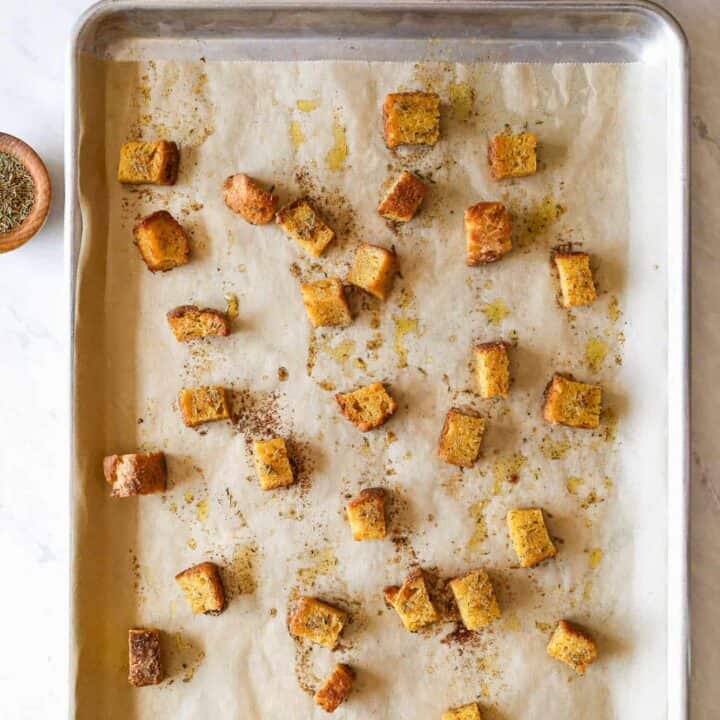
- Gluten Free Sourdough Croutons, a great way to use up discard
- Gluten Free Sandwich Bread that is also perfect for toast
- Gluten Free Cheesy Bread is perfect with soups
Top Tip
- Gluten free sourdough starters tend to take longer to ferment and start bubbling than a regular starter. Be patient, it will happen.
- Do not use tap water that has chlorine in it for this recipe. It is best to use filtered water or tap water from a well. Chlorine will hinder the fermenting process of your starter.
Frequently Asked Questions
I know that some people who have an intolerance to gluten can eat sourdough that is made from regular wheat flour. That isn't the case for me and may not be the case for you. If you can't tolerate any gluten I wouldn't suggest eating regular sourdough bread.
This recipe shows you how to make your own gluten free sourdough starter. I love that you are in control of everything that goes into the starter and the environment it is processed in. You will know for sure that it's gluten free and safe for you.
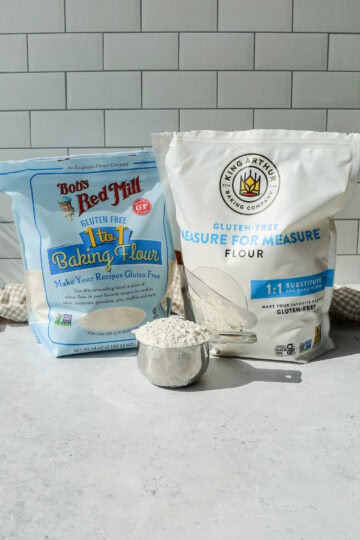
Gluten Free King Arthur Measure for Measure or Gluten Free Bob's Red Mill 1 to 1 both work well. Any regular gluten free flour blend should work, and there is no need for a specialty gluten free bread flour.
Feed it again so you can keep making starter for future batches of bread. If you don't want to make more right away, place it in the fridge to slow down fermentation until you're ready to use it again.
The starter that goes in the fridge makes one loaf. The starter left on the counter can be fed continuously, allowing you to make a new loaf every two days.
Didn't find the answer you're looking for?
Ask AI to answer based on this recipe:
Supplies


More Recipes You Might Enjoy


I get a lot of my ingredients from Thrive Market. Thrive Market has been a game changer for me eating gluten free. They have so many options I can't get at my rural grocery stores! Use this link to get 40% off your first order!
Print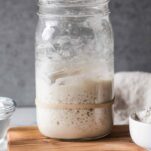
Gluten Free Sourdough Starter
- Total Time: 5 minutes
- Yield: ¾ cup daily 1x
- Diet: Gluten Free
Description
This gluten free sourdough starter is made with just two ingredients: gluten free flour and water. It takes about a week of daily feeding to become active and bubbly, and once it's ready, you can use it in gluten free sourdough bread, pizza crust, and more.
Ingredients
- ⅓ cup Gluten Free Flour
- ⅓ cup Hot Water (not too hot to burn, but also warmer than room temperature)
Instructions
Day 1: Combine the flour and hot water in a one quart jar. Stir well, then loosely cover with a lid or a coffee filter secured with a rubber band. Place the jar in a warm spot, ideally 70 to 74 degrees.
Days 2 through 6: At the same time each day, discard half of the starter, then feed the remaining starter with another ⅓ cup gluten free flour and ⅓ cup hot water.
Day 7: Instead of discarding, save the discard in a separate container and place it in the fridge. Feed the starter in the jar as usual (⅓ cup gluten free flour and ⅓ cup hot water).
Day 8: Add the day 7 discard to the container already in the fridge. Feed the jar of starter on the counter another ⅓ cup flour and ⅓ cup hot water.
Ongoing: Once established, keep your starter on the counter and feed it every day to bake regularly, or store it in the fridge and feed it once a week to keep it alive.
If you made this recipe please leave a star rating and comment below. It helps other readers find this recipe and means so much to me.
- Prep Time: 5 minutes
- Category: Breads
- Method: Fermenting
- Cuisine: American
If you make this gluten free sourdough starter, I would love to hear how it turns out. Leave a comment below and let me know how your starter is doing, and be sure to tag @smallfarmbiglife on Instagram once you bake your first loaf. For more gluten free sourdough recipes like this one, subscribe to the newsletter so you never miss a new post.
Sourdough Starter Ingredients
Gluten Free Flour
Hot Water (not too hot to burn, but also warmer than room temperature)
Instructions
Day 1: Combine the flour and hot water in a one quart jar. Stir well, then loosely cover with a lid or a coffee filter secured with a rubber band. Place the jar in a warm spot, ideally 70 to 74 degrees.
Days 2 through 6: At the same time each day, discard half of the starter, then feed the remaining starter with another ⅓ cup gluten free flour and ⅓ cup hot water.
Day 7: Instead of discarding, save the discard in a separate container and place it in the fridge. Feed the starter in the jar as usual (⅓ cup gluten free flour and ⅓ cup hot water).
Day 8: Add the day 7 discard to the container already in the fridge. Feed the jar of starter on the counter another ⅓ cup flour and ⅓ cup hot water.
Ongoing: Once established, keep your starter on the counter and feed it every day to bake regularly, or store it in the fridge and feed it once a week to keep it alive.

sandra says
after I put the 8th day discard into the container in the fridge, what do I do with the container I left out? does that get thrown out?
smallfarmbiglife says
Hi Sandra. The container you have left gets fed again so you can produce more sourdough starter the next day. When you reach a point where you have enough starter or want to skip days you can feed the starter you have left again and then put it in the fridge to slow down the fermentation process.
Nancy Curtis says
What do I do with the rest of the jar that has been kept at room temperature after I add the discard to the jar from the fridge on the 8th day?
smallfarmbiglife says
Hi Nancy. I feed the jar at room temperature again so I can keep making starter for more batches of bread. If you don't want to make more starter I would place the starter in the refrigerator until you're ready to continue to use it for making starter. ~Elaine
Sheila says
What do you mean by you can contnue the process of making bread every other day?
smallfarmbiglife says
If you continue to feed and remove from your sourdough starter you should have enough starter to make bread every other day. The starter doesn't make enough to make bread every day.
Aida Peña says
So what flour do I use to start the starter? What flour do I use to feed the starter?
smallfarmbiglife says
Hi Aida. I use either King Arthur's Measure for Measure Gluten Free Flour or Bob's Red Mill Gluten Free 1-to-1 Flour. I know various places have different brands and options for gluten free flour, so any type of regular gluten free flour blend should work. There's no need to get gluten free bread flour for this starter or making the bread. I hope that helps. ~Elaine
Mary Clare says
What would the gram measurements be please?
smallfarmbiglife says
Hi Mary Clare. I don't measure anything in grams so I don't have a conversion for you. ~Elaine
Jennifer Stolz says
Is the container that is put in the refrigerator on the 7th day the container that gets the 8th day discard put in it and then gets left out to become another starter. The original starter is now ready to use on the 8th day? How many loaves can be made from the original starter?
smallfarmbiglife says
Hi Jennifer. The container that is put in the fridge on the seventh day and added to on the eighth day is what you will make your loaf of bread from (it makes one loaf). The discard is what I make the gluten free sourdough bread from in my recipes. The starter that is out on the counter can continue to be fed and you can make a new loaf of bread every two days. If you don't want to make more bread immediately you can put the original starter in the fridge and feed it once a week until you're ready to use it again. I hope that helps. ~Elaine