

If you have spent any time in the gluten free baking aisle, you already know there are dozens of flour blends lined up on the shelf, all promising to be the one you need. I get asked all the time which one I actually use, so let me save you the guesswork. Out of everything on the market, two blends are what I reach for most often: Bob's Red Mill 1 to 1 Baking Flour and King Arthur Measure for Measure. After years of testing recipes on this blog, these two give me consistent, reliable results for the vast majority of what I bake, from cookies and cakes to muffins and quick breads.
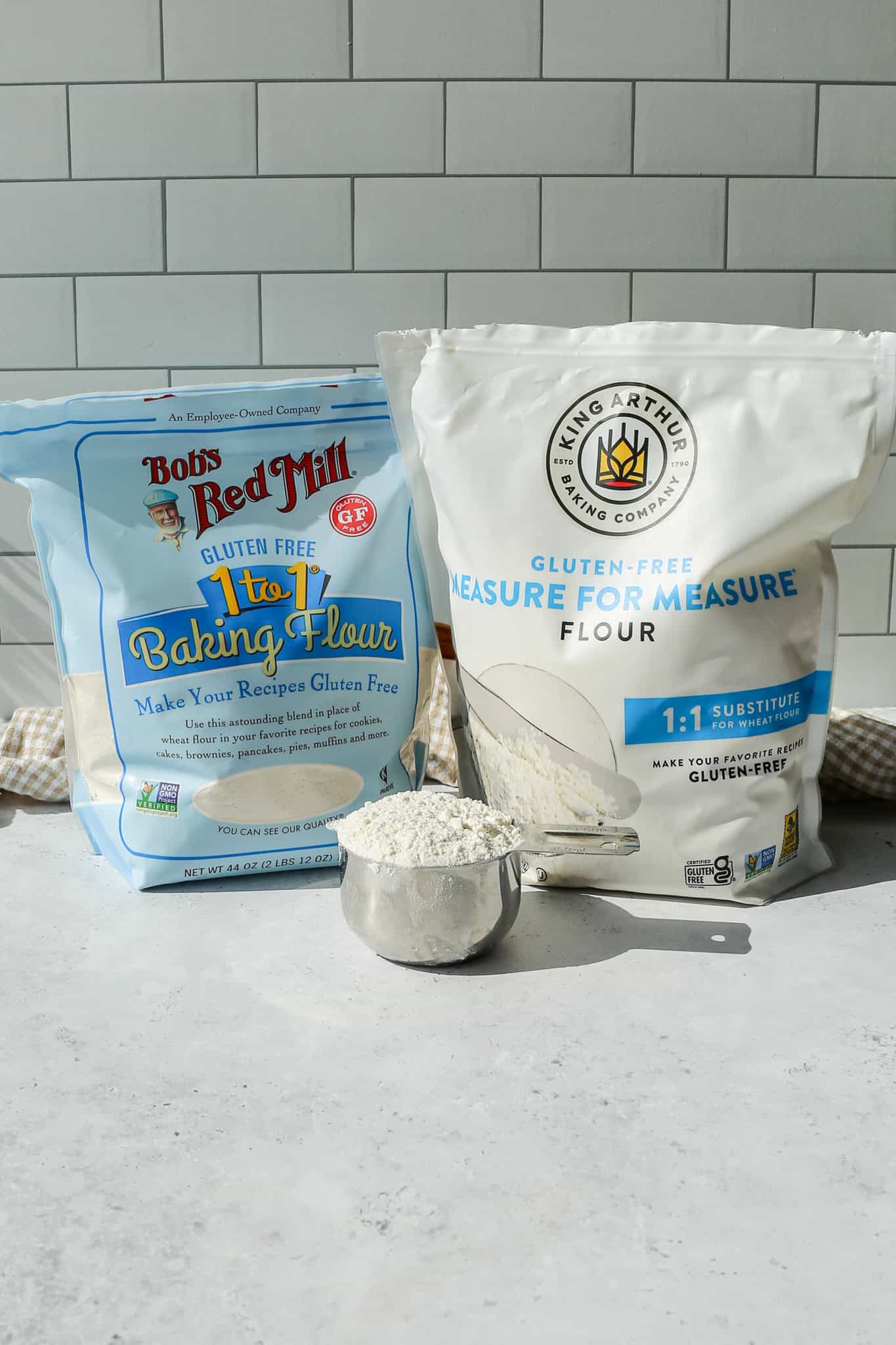
That said, these two aren't the only flours you will find in my recipes. My Gluten Free Sourdough Bread uses a custom blend I developed myself, and almond flour shows up in several recipes when I want a different texture or flavor. Below, I will focus on Bob's Red Mill and King Arthur since they cover most everyday baking, and I will also point you to where my other flours come in.
This is not a substitution guide. Gluten free flour is simply how I bake and these two blends are my everyday standard. Below I'll walk you through what makes each one different, which one performs better for specific recipes, and how to decide which bag to reach for.
Quick Answer: Which Flour Should I Use?
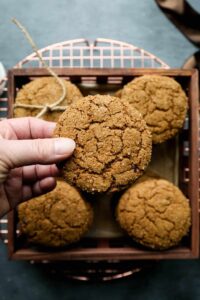
- Cookies: Bob's Red Mill 1 to 1 for a thicker, chewier cookie that holds its shape. King Arthur Measure for Measure if you want more spread and a crisper edge.
- Cakes and cupcakes: King Arthur Measure for Measure. Its finer grind gives you a lighter, more tender crumb.
- Quick breads and muffins: Bob's Red Mill 1 to 1. The slightly heartier texture holds up well in banana bread, zucchini bread, and muffins with mix ins.
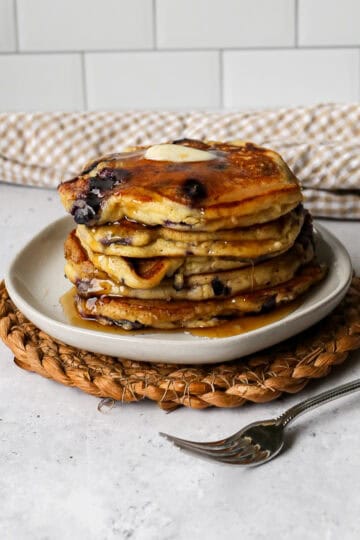
- Pancakes and waffles: Either one works well here. King Arthur gives a slightly fluffier pancake, while Bob's Red Mill makes a heartier one that holds up under syrup and toppings.
- Pie crust and biscuits: King Arthur Measure for Measure, for a more tender, flakier result.
- Yeasted and sourdough bread: This one depends on the recipe. Several of my sourdough recipes use King Arthur Measure for Measure with great results, but for my gluten free sourdough bread specifically, I developed my own custom blend of sweet sorghum flour, tapioca flour, brown rice flour, and potato starch. That particular loaf needed a bit more structure than a standard 1 to 1 blend gives, so I built one that worked.
Why These Two Blends Aren't Interchangeable
Gluten free flour blends aren't standardized the way all purpose wheat flour is. Every brand uses a different ratio of rice flour, starches, and binders, and that ratio is what determines how a recipe turns out. Bob's Red Mill and King Arthur both include xanthan gum already mixed in, so you don't need to add your own, but the similarities mostly end there.
Bob's Red Mill leans more on whole grain flours like sorghum, which gives baked goods a bit more structure and a very slight earthiness. King Arthur relies more heavily on finely milled rice flour and starch, which produces a lighter texture but can behave a little differently when a recipe needs more structure to hold its shape.
Neither one is better across the board. It really depends on what you're making.
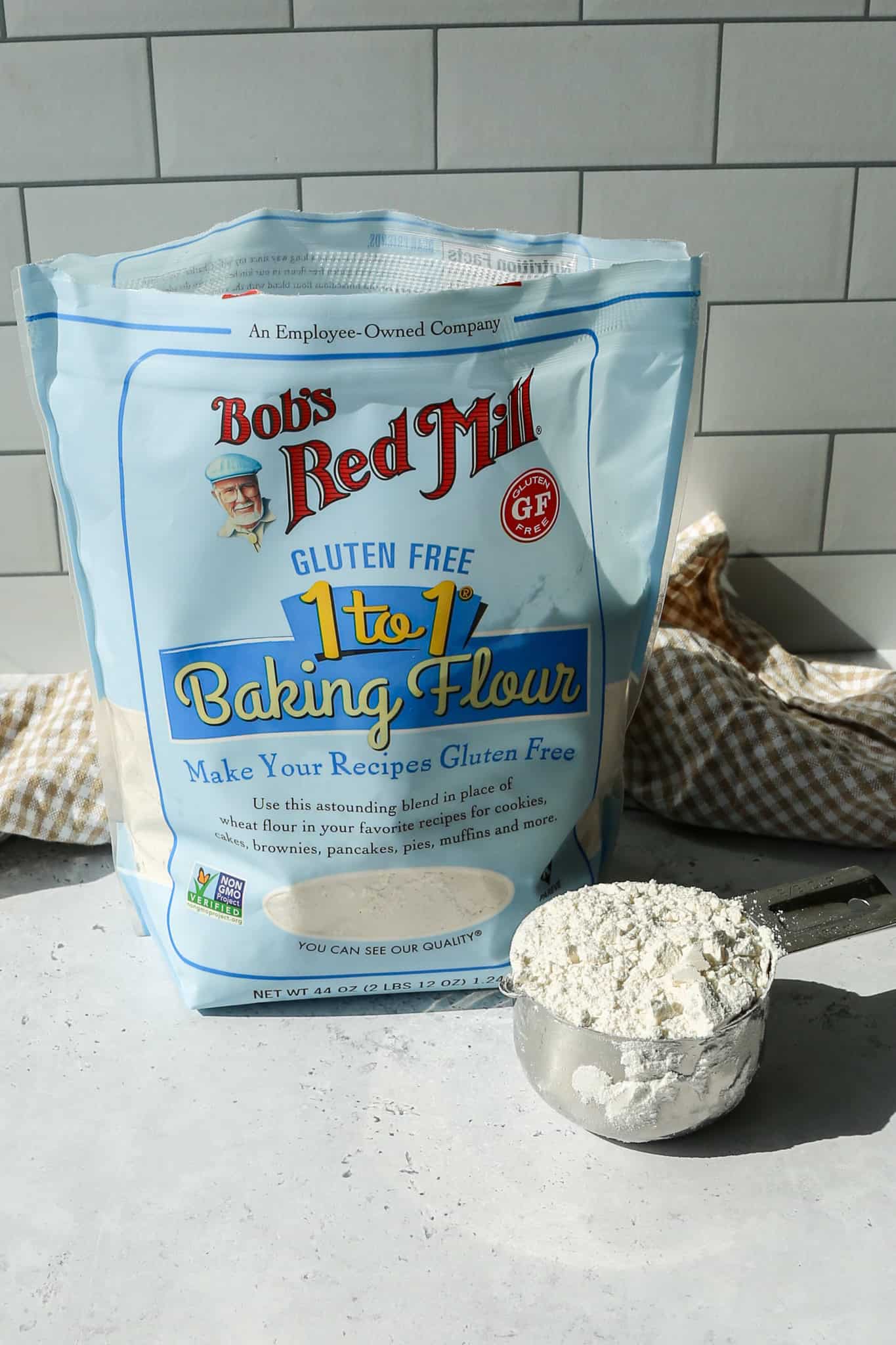
Bob's Red Mill 1 to 1 Baking Flour
This is my go to for everyday baking, and it's the flour I recommend most often to anyone just getting started with gluten free baking. It contains rice flour, tapioca starch, potato starch, and sorghum flour, along with xanthan gum.
What I love about it:
- Widely available at most grocery stores, not just specialty shops
- Great value for the amount you get in a bag
- Holds its shape well in cookies and quick breads
- Adds a little natural nuttiness that works beautifully in banana bread and zucchini bread
What to know:
- It's a touch denser than King Arthur, which is exactly why I reach for it in recipes where I want more structure.
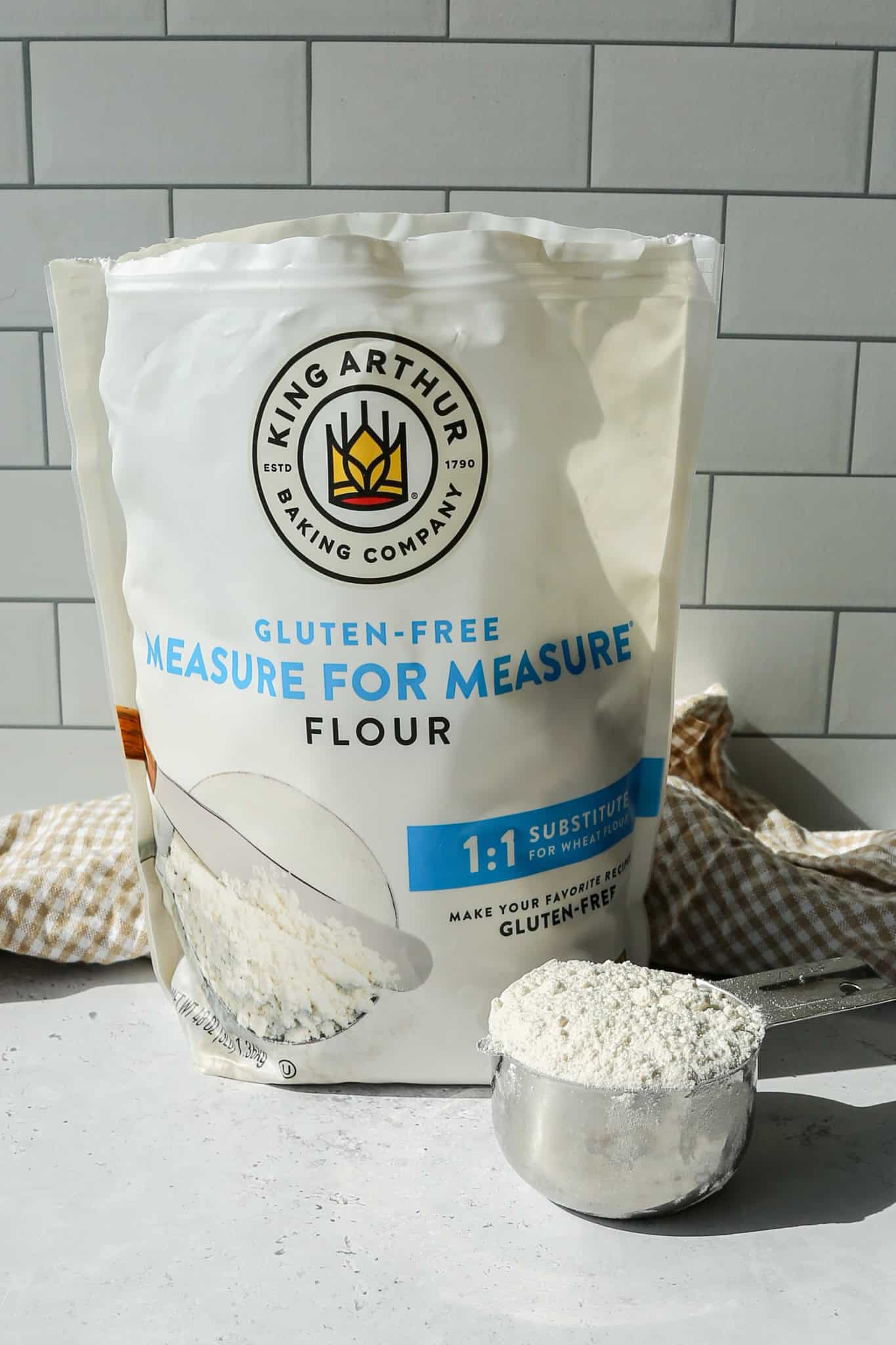
King Arthur Measure for Measure
This is the flour I turn to when I want a lighter, more delicate result. It's made with a blend of rice flour, whole grain brown rice flour, and sorghum flour, and it also contains xanthan gum.
What I love about it:
- Finer, smoother texture with less grit
- Produces a noticeably lighter crumb in cakes and cupcakes
- Great for pie crust and biscuits when you want a flakier bite
- Easy to find at most major grocery stores
What to know:
- Because it's lighter, it doesn't always hold its shape quite as well in heartier baked goods like dense muffins or thick quick breads.
What About Almond Flour and My Custom Sourdough Blend?
Bob's Red Mill 1 to 1 and King Arthur Measure for Measure are what I reach for most, but they aren't the only flours you'll see on this site. Several recipes call for almond flour alongside my regular gluten free flour when I want more moisture and a slightly nutty flavor, like my Gluten Free Banana Oat Muffins, Gluten Free Cherry Almond Cake, and Gluten Free Blueberry Oat Muffins. In each of these, the almond flour works together with my regular gluten free flour rather than replacing it, giving the finished bake a heartier texture than Bob's Red Mill or King Arthur would on their own.
I also have recipes that use almond flour as the entire base, like my Gluten Free Italian Almond Flour Bread, which skips gluten free flour altogether since almond flour gives that loaf exactly the texture I want.
I also make several sourdough recipes with King Arthur Measure for Measure, but for my GlutenFree SourdoughBread specifically, I built a custom blend of sweet sorghum flour, tapioca flour, brown rice flour, and potato starch, since that particular loaf needed more structure than a standard 1 to 1 blend could give it.
If a recipe on my site calls for something other than Bob's Red Mill or King Arthur, it's because I tested it and found it gives a better result for that specific bake. For everyday baking, though, these two are the ones I recommend starting with.
Side by Side Comparison
| Bob's Red Mill 1 to 1 | King Arthur Measure for Measure | |
| Texture | Slightly heartier, a bit more grain | Finer, smoother |
| Best for | Quick breads, muffins, cookies that need to hold shape | Cakes, cupcakes, pie crust, biscuits |
| Contains xanthan gum | Yes | Yes |
| Availability | Most grocery stores | Most grocery stores |
| Flavor | Mild, subtle nuttiness | Very neutral |
Tips for Getting the Best Results With Either Flour
- Follow the recipe's specific instructions. If a recipe tells you to chill cookie dough or a pie crust, that step matters and shouldn't be skipped. Otherwise, both of these flours are ready to bake with as soon as your batter or dough comes together.
- Don't overmix. Gluten free batters don't need the same amount of mixing as wheat based ones. Mix just until combined to avoid a gummy texture.
- Store your flour properly. Keep both blends in an airtight container in a cool, dry pantry. If you don't bake often, the fridge or freezer will extend their shelf life.
Frequently Asked Questions
Most of the time, yes. Since both are 1 to 1 blends with xanthan gum already included, they can usually be swapped without major changes. The texture of the finished recipe will shift slightly depending on which one you use, so keep the notes above in mind when deciding.
No. Both Bob's Red Mill 1 to 1 and King Arthur Measure for Measure already include xanthan gum in the blend, so you don't need to add more unless a specific recipe calls for it.
It depends on the recipe. I use King Arthur Measure for Measure successfully in several of my sourdough recipes. For my gluten free sourdough bread specifically, that loaf needed more structure than a standard 1 to 1 blend could give it, so I developed a custom blend using sweet sorghum flour, tapioca flour, brown rice flour, and potato starch instead. That recipe walks through exactly how I approach it.
This is a common complaint with rice flour based blends. Bob's Red Mill tends to be slightly more noticeable here than King Arthur, since King Arthur is more finely milled. If grittiness bothers you, King Arthur Measure for Measure is the better choice, especially for delicate bakes like cakes and pie crust.
Yes. Because these blends contain whole grain flours and starches, they can go rancid faster than all purpose wheat flour. Store them in an airtight container, and if you notice an off smell, it's time to toss it and start fresh.
The Bottom Line
You do not need a pantry full of specialty gluten free flours to bake well. Out of everything I have tested on this blog, Bob's Red Mill 1 to 1 and King Arthur Measure for Measure are the two blends I reach for most often, and between the two of them I can make nearly everything from cookies and cakes to muffins and pancakes with reliable, delicious results every time.
When a recipe calls for something else, like almond flour or my custom sourdough blend, it's because I tested it and found it gives a better result for that specific bake. Start with whichever one is easiest for you to find, and use this guide to decide when to reach for the other.

Didn't find the answer you're looking for?
Ask AI to answer based on this recipe:


Leave a Reply